Chief AI Officer vs CTO.
Who owns AI at your company? The two roles overlap enough to cause an argument in most leadership teams. Here is the division that actually holds up, from someone who has sat in both chairs and now fills them at the same time.
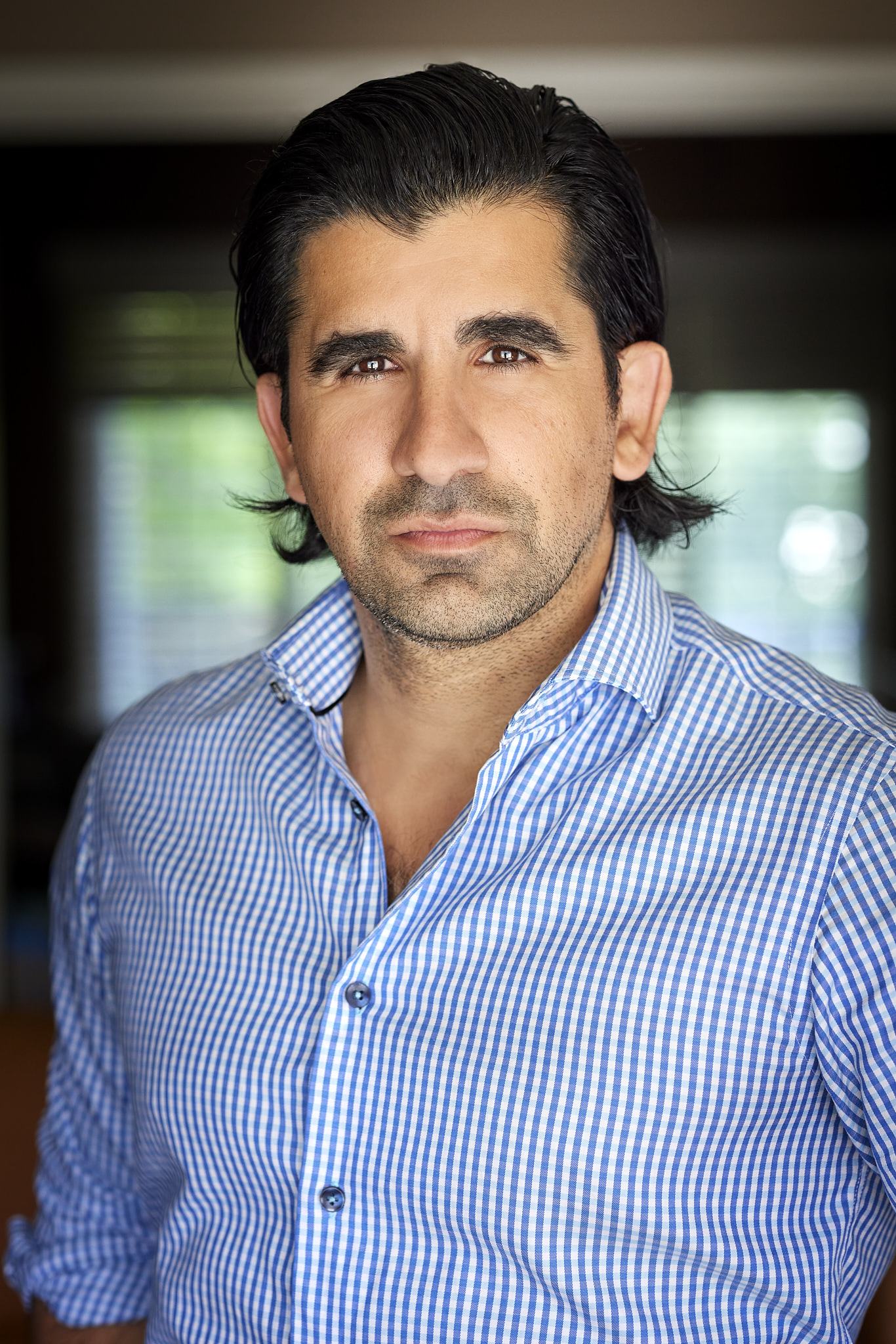
I hold both seats.
One disclosure before the comparison, because it should change how you read the rest of the page.
I've spent twenty-five years as a CTO and I hold the Chief AI Officer seat now. I arrive able to fill both roles, which is why this page ends somewhere most comparisons don't.
That is not a proposal to replace your CTO, your VP of Engineering or your Director of IT. It is close to the opposite. Those people already have a full job, and the standard failure is handing them a second one labelled AI and hoping it fits in the margins. I take that second job off their plate and work alongside them, so the arrangement adds capacity rather than competing for it. The interlock gets written down before anything ships: review gates agreed with your CTO and enforced in their pipeline, the AI budget line split from platform spend up front, AI hires reporting into the engineering org, and any hold I place on a launch escalating to the CEO with the evidence attached.
What you get for it is speed and one salary instead of two. The strategy conversation and the architecture decision happen in the same head on the same afternoon. There is no hand-off between an advisor who recommends and an engineer who implements, and no quarter lost while the two learn each other's vocabulary.
The range is the whole point. I'll run the AI discovery workshops with the business, implement AI inside marketing, finance or operations, then go down into the agents themselves, the architecture behind them, the governance that keeps them shippable, and the training that leaves your engineers able to run all of it without me.
Which is also the honest answer to "do we need two executives?": with no CTO in the building, no: one operator can hold both seats. With one, the answer is one more seat working alongside them, not a second version of the seat you already filled.
One owns a function. One owns a discipline.
A CTO owns the technology function: engineering, infrastructure, architecture, security and delivery. The scope is a department and everything it produces. A Chief AI Officer owns AI as a discipline wherever it shows up, which includes finance, operations, legal, support and every other department that never reported to engineering.
That's the clean line, and it's usually enough. The place it stops being clean is the build. AI systems are software, so they land in the CTO's pipeline no matter whose strategy produced them. That collision is normal and manageable, provided somebody decided in advance who signs off on what.
The failure mode isn't a turf war. It's the opposite: AI is nominally the CTO's job, actually nobody's, because the CTO is already fully loaded keeping the platform alive and the AI work quietly becomes a side project that nobody is measured on.
Related comparisons: CAIO vs Chief Data Officer, CAIO vs VP of AI, fractional CAIO vs AI consultant.
What each seat actually owns.
Scope, accountability, and the question each one has to answer when something goes wrong. Worth reading as two job descriptions rather than two hires, because at mid-market scale one operator can carry both.
The technology function
- , Engineering org, architecture, infrastructure, platform reliability
- , Delivery performance and the roadmap the product needs
- , Security posture, technical debt, build-vs-buy across the stack
- , Hiring and running the engineering team
- , Answers for: does the platform work, and can we ship on it?
AI, company-wide
- →AI strategy and capital allocation across every department
- →The portfolio: what gets funded, what gets killed, in what order
- →AI governance, risk classification, evaluation and regulatory posture
- →AI literacy across the business, and the AI-capable hires
- →Answers for: did the AI investment produce a measurable result?
Where the two collide.
Six decisions that need an owner named before the first serious AI project, not during it.
Who owns the pipeline
AI systems ship through engineering's CI. Decide early whether AI review gates are the CAIO's controls enforced in the CTO's pipeline, or something else.
Model and vendor spend
Inference cost looks like infrastructure and behaves like a product decision. If it lands in the CTO's budget by default, the CAIO owns a portfolio without the money.
Who says no
A launch blocked on evaluation results is a governance call, not an engineering one. If the CAIO can't stop a ship date, governance has no teeth.
The data dependency
Half the use-case list depends on data that doesn't exist yet. Whether the CDO or the CTO owns fixing that determines whether the roadmap is real.
AI hiring
AI-capable engineers report to engineering but are recruited against the CAIO's roadmap. Split it wrong and you hire for the org chart instead of the work.
The board narrative
Two executives presenting adjacent versions of the same program is how boards lose confidence in both. Agree who tells the AI story.
Which do you need?
Four situations, four different answers. Without a CTO in the building, most mid-market companies land in the third; with one, the second.
You need a CTO, not a CAIO
The platform is the constraint. Delivery is slow, the architecture is straining, the team can't scale, and AI is one item on a long list. Give AI to the CTO with an explicit mandate and a budget line.
See: fractional CTOYou need a CAIO, not another CTO
Engineering is in good shape and the CTO is competent and busy. What's missing is anyone accountable for AI across finance, operations and support, and for the risk that comes with it.
See: fractional CAIOYou need one person holding both
You have no CTO and no appetite to hire two executives. One operator with genuine engineering depth runs the AI agenda and the technology function together, which is most of my work. If a CTO already holds the seat, this isn't your scenario: 02 is.
How that engagement runsYou need both, separately
AI is the product or the primary regulatory exposure, the AI team is big enough that somebody has to run it every day, and the CTO's plate is already full. Two seats, with the interlocks above agreed in writing.
See: full-time CAIOThe worst answer to "who owns AI here" is the CTO, technically. That's the sentence companies say for eighteen months before discovering nobody owned it at all.
CAIO vs CTO, answered.
What is the difference between a Chief AI Officer and a CTO?
A CTO owns the technology function: engineering, infrastructure, architecture, security and delivery. A Chief AI Officer owns AI as a discipline across the entire business, including departments outside engineering, plus AI-specific risk, governance and the portfolio of AI investments. The CTO answers for whether the platform works; the CAIO answers for whether the AI investment produced a measurable result.
Can the CTO just own AI?
Yes, when AI is essentially an engineering capability, the exposure is contained, and the CTO has the bandwidth and an explicit mandate with a budget behind it. It stops working when AI decisions span functions the CTO doesn't own, when AI-specific risk needs a named owner, or when the CTO is already fully occupied keeping the platform alive.
Does the CAIO report to the CTO?
Sometimes, though most CAIOs report to the CEO. Reporting into the CTO works when AI is largely a product and platform matter. It works badly when the CAIO's mandate covers operations, finance or legal, because a role reporting into engineering struggles to hold departments that don't.
Can one person be both CAIO and CTO?
At mid-market scale, often yes, and it avoids an expensive interlock problem. It requires genuine engineering depth rather than an AI strategist with a technology title. I hold both, which is why companies hire me to run the AI agenda without the technology function coming apart underneath it.
Where does the Chief Data Officer fit?
The CDO owns the data foundation: governance, quality, architecture and privacy. The CAIO decides what to build on that foundation and owns the risk of doing so. If you have to sequence, the honest answer is that a CAIO without trustworthy data spends the first quarter doing the CDO's job anyway.
What happens if we appoint neither?
The pattern is consistent. Shadow AI spreads because nobody set a sanctioned path, pilots accumulate because nobody has authority to kill them, spend rises without attribution, and the first real answer arrives when an auditor or an enterprise customer asks a question nobody can answer. MIT's 2025 NANDA study found 95% of generative AI pilots produced no measurable P&L impact, and ownership was a recurring cause.
Related reading & paths.
What is a Chief AI Officer?
The role explained: the mandate, the reporting line, and the four signals that say you need one.
Fractional CAIO services
The engagement itself: what I own, how the phases run, and the published price.
Fractional CTO services
The technology seat, part-time: strategy, architecture, hiring and delivery owned end-to-end.
Who should own AI?
The CEO, COO, CFO or IT director as owners, and the distortion each one introduces.
Still not sure who
should own it?
Describe your leadership team and where AI keeps stalling. I'll tell you which seat is actually missing, even when the answer is neither.